
Tata Motors’ Bold Step into the Two-Wheeler Arena
1. The Big Picture: Why This Matters
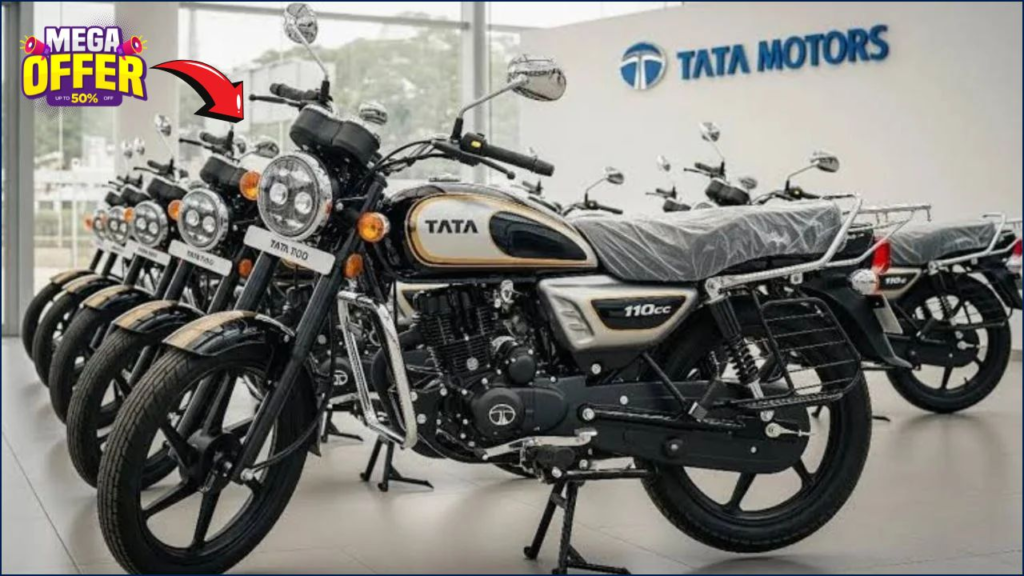
Tata Motors — a name long associated with cars, trucks and electric mobility — is reportedly prepping to enter India’s two-wheeler market, particularly the commuter motorcycle segment (100 cc–125 cc).
A few key reasons for why this move is noteworthy:
- Massive market potential: India’s two-wheeler market outsizes many others in automobile segments — affordable, high-volume bikes are a household staple.
- Brand leverage: Tata has a strong brand, wide service network and manufacturing presence in India — advantages in a crowded bike market.
- Strategic diversification: With competition intensifying in cars and EVs, moving into the commuter bike segment opens a new growth front for Tata.
- Value proposition shift: The emerging plan emphasises fuel efficiency, retro styling and affordability — a niche many current bikes in the sub-₹1 lakh segment strive to hit. For example, one report cites a mileage target of ~95 km/l for an upcoming 110cc model.
2. What We Know So Far: The Rumoured Models & Specs
While nothing yet has been fully officially confirmed (or at least publicly verified) by Tata, several credible reports provide a fairly consistent outline of what’s coming.
Features touted
- LED lighting, digital or semi-digital instrument cluster.
- USB charging port, tubeless tyres, modern braking.
- Built with Indian road conditions in mind (city & semi-urban).
- “Made in India” strategy to keep costs competitive.
3. The Strategy Behind It
Why is Tata choosing now and why this segment? A few strategic angles:
- Volume and scale: The commuter bike segment (100–125 cc) still sees large numbers of buyers, especially in Tier-2 & Tier-3 cities. Entering this space can bring high volume.
- Brand trust: Many bike buyers may prefer a company they already trust for automobiles; this is a potential edge for Tata over newer or niche bike makers.
- Cost & network advantage: With its existing manufacturing and dealership footprint, Tata might exploit economies, faster rollout and service reach higher than many smaller entrants.
- Future mobility link: Even though these are petrol bikes (for now), the experience may pave the way for future two-wheeler EVs or hybrid offerings under the Tata umbrella.
- Competitive disruption: Brands like Hero, Bajaj, TVS dominate this space — Tata entering sends a strong signal and may force innovation / pricing responses. For instance: “Tata’s entry could shake up the market … thanks to its brand value, wide service network, and promise of build quality.”
4. Risks & Challenges Ahead
No venture is without challenges — and Tata’s two-wheeler move is no exception.
- High competition: The commuter bike segment in India is very crowded. Many models with decades of refinement exist. Gaining market share will be tough.
- Execution matters: Good specs on paper (mileage, features, pricing) may not translate into real-world performance, reliability and value unless delivery is strong.
- After-sales & spares: While Tata has strong automobile after-sales, bikes have unique needs (service frequency, spare parts supply, small part availability) especially in semi-urban or rural areas.
- Brand perception in two-wheelers: Even though Tata is trusted in cars, bike buyers may still lean on legacy bike brands unless Tata clearly proves quality, ride feel and robustness.
- Fuel vs EV trend: As the world pivots toward electric mobility, launching new petrol bikes carries some long-term risk — though for now the commuter petrol market remains huge.
- Rumour vs reality: Some reports suggest that images/specs floating around may be speculative; e.g., there are viral posts of a “Tata 125cc bike” which may be fake.
5. What This Means for You (the Buyer)
If you’re someone in India looking to buy a commuter bike in the 100–125 cc range, here are things to watch:
- Wait for official launch: Many details are still rumoured — engine output, real-world mileage, variant breakdown, etc.
- Ride & feel count: For bikes, the ride comfort, handling on Indian roads, service network and spare-parts ecosystem matter heavily — beyond just specs.
- Value for money: Compare what Tata is offering versus existing strong models (e.g., Hero Splendor, TVS Radeon, etc.) — if Tata comes in better or equal with its brand backing, that’s attractive.
- Resale & parts: Check how the parts supply looks, how fast service centres roll out in your area, and what resale value the model may command in the future.
- Fuel economy vs daily use: Mileage claims (80–95 km/l) are good headlines — check whether they hold under real conditions (stop-go traffic, load, rural roads).
- Future proofing: Even though this is a petrol bike, consider how long you intend to keep it, whether you may upgrade to EV later — Tata’s two-wheeler plans may evolve.
6. Final Thoughts
Tata entering the bike segment is a big deal — not just for its brand, but for the overall market dynamics. If done right, it could give Indian commuters a fresh alternative: strong brand, decent styling, good features, and economy.
However, the devil is in the details — launch timing, pricing, real-world performance, service network, and how Tata differentiates itself from decades-old competitors. If all those align, this could be a game-changer. If not, it may just add another competitor to an already crowded field.