Kabaddi: India’s Ancient Sport Making Global Waves
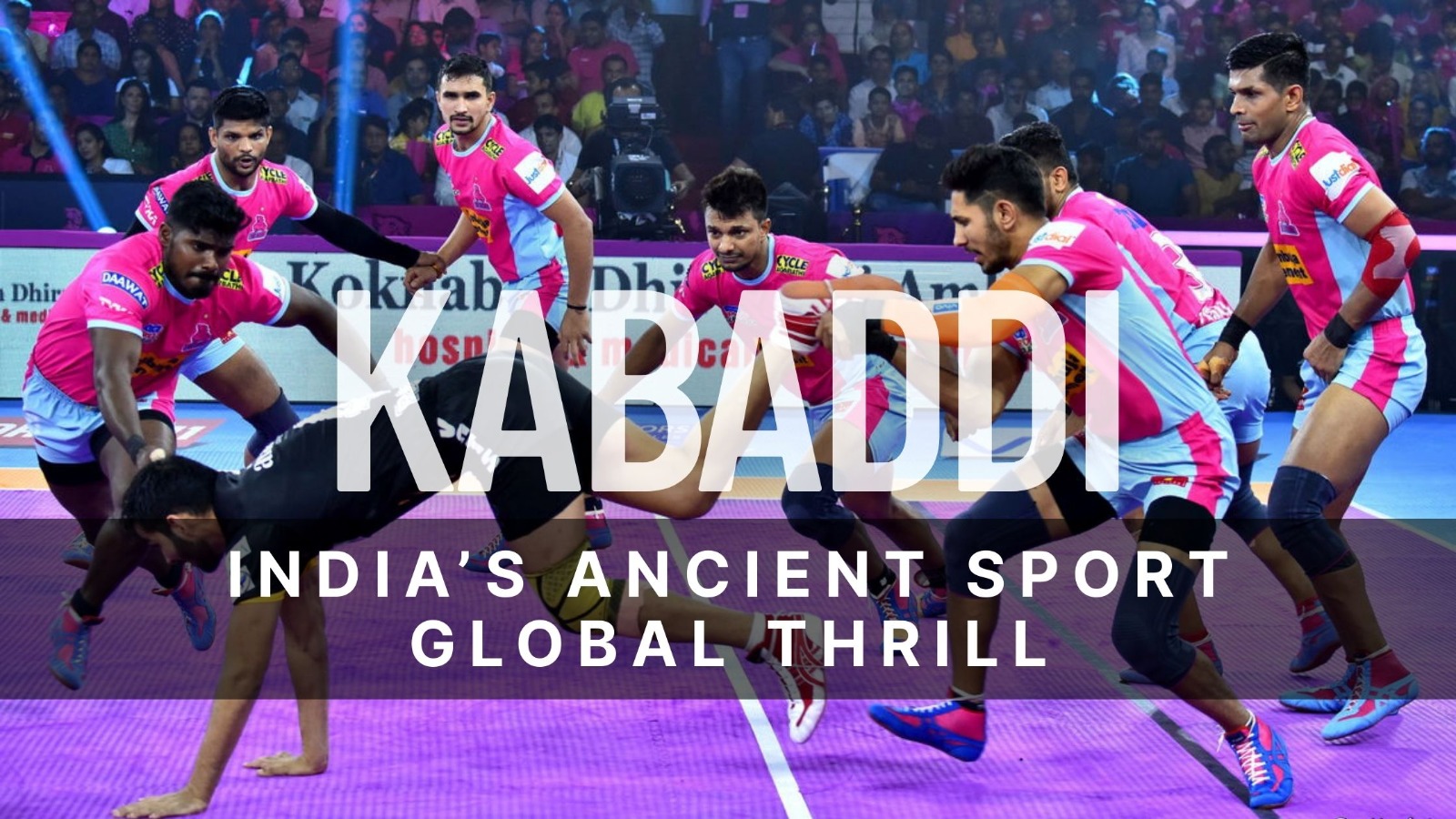
Once played on dusty village fields with nothing but grit and spirit, Kabaddi has emerged as one of the fastest-growing sports in Asia—and is gaining traction around the world. Combining speed, strategy, strength, and stamina, Kabaddi is more than just a contact sport; it’s a cultural legacy being reborn for the modern era.
If you haven’t followed Kabaddi lately, it’s time to dive in. Let’s explore where the sport came from, how it’s evolving, and why it’s becoming a global spectacle.
🇮🇳 The Roots: Where Kabaddi Began
Kabaddi is believed to be over 4,000 years old, with roots in ancient India. Historical references can be found in scriptures and folklore, particularly in southern India. It was originally a way to train warriors—focusing on breath control, agility, and teamwork.
The word “Kabaddi” itself is derived from the Tamil word “Kai-pidi”, meaning “to hold hands”. Over time, the game evolved, spreading across rural India and becoming a popular pastime in states like Maharashtra, Punjab, Tamil Nadu, and Haryana.
Modern Kabaddi: From Mud Pits to Stadiums
Today’s Kabaddi is a sleek, televised, high-energy sport with bright lights, big sponsors, and international fans.
Key Milestones:
- 1990: Kabaddi became an official sport at the Asian Games.
- 2014: Launch of the Pro Kabaddi League (PKL) revolutionized the sport.
- 2020s: Kabaddi started expanding globally, with teams and leagues emerging in countries like Iran, South Korea, Kenya, and even Canada.
The Pro Kabaddi League, in particular, brought kabaddi from rural corners to urban audiences—repackaging it with fast edits, high-definition graphics, celebrity owners, and massive crowds. Today, it’s one of the most-watched leagues in India, only behind the IPL (Indian Premier League) in viewership.
The Game: How Kabaddi Works
Kabaddi is a 7 vs. 7 team sport, played in two halves of 20 minutes each.
- The Raider: One player enters the opponent’s half, chants “Kabaddi, Kabaddi” without taking a breath, and tries to tag as many defenders as possible before returning.
- The Defenders: The goal is to stop the raider and tackle them before they return safely.
- Scoring: Points are earned for tags and tackles. Bonus points are awarded in specific situations (like touching the bonus line).
Variants of the game include Standard Kabaddi, Circle Style, Beach Kabaddi, and Indoor Kabaddi.
Kabaddi’s Growing Global Appeal
Kabaddi is no longer India’s secret. Nations like Iran, South Korea, Bangladesh, Pakistan, Nepal, Kenya, and Sri Lanka have strong national teams. Players like Fazel Atrachali (Iran) and Jang Kun Lee (South Korea) are international stars.
The Kabaddi World Cup, organized by the International Kabaddi Federation, has helped globalize the game. India has been dominant in the men’s and women’s tournaments—but challengers are rising fast.
There are also efforts to push Kabaddi into the Olympics, with growing support from Asia and Africa.
Why Kabaddi Is Captivating Audiences
Here’s what makes Kabaddi unique and addictive:
- No Equipment Needed: Just a mat or open space.
- High-Intensity Action: Every raid is a mini-drama.
- Cultural Pride: Deep roots in rural traditions.
- Strategic Depth: Not just muscle—timing, psychology, and tactics matter.
- Accessible to All: Can be played anywhere, by anyone.
What’s Next for Kabaddi?
The future of Kabaddi looks bright:
- Pro Kabaddi League Season 11 is expected to expand to more cities.
- Women’s Kabaddi is gaining prominence with leagues and tournaments.
- Digital broadcasting is bringing the game to fans worldwide.
- School and university kabaddi are being promoted through grassroots programs.
As younger audiences embrace the sport on social media and streaming platforms, Kabaddi is no longer confined to regional fame—it’s on the world map.
Final Thoughts: A Homegrown Sport Goes Global
Kabaddi is a perfect example of how traditional sports can evolve, adapt, and shine on the global stage. With the right support, media attention, and international cooperation, it could become the next major export from India’s rich sporting culture.
So, next time you hear someone chanting “Kabaddi, Kabaddi,” pay attention—it’s not just a game. It’s history, strategy, and excitement rolled into one.