
Esports vs. Traditional Sports: A New Era of Competition
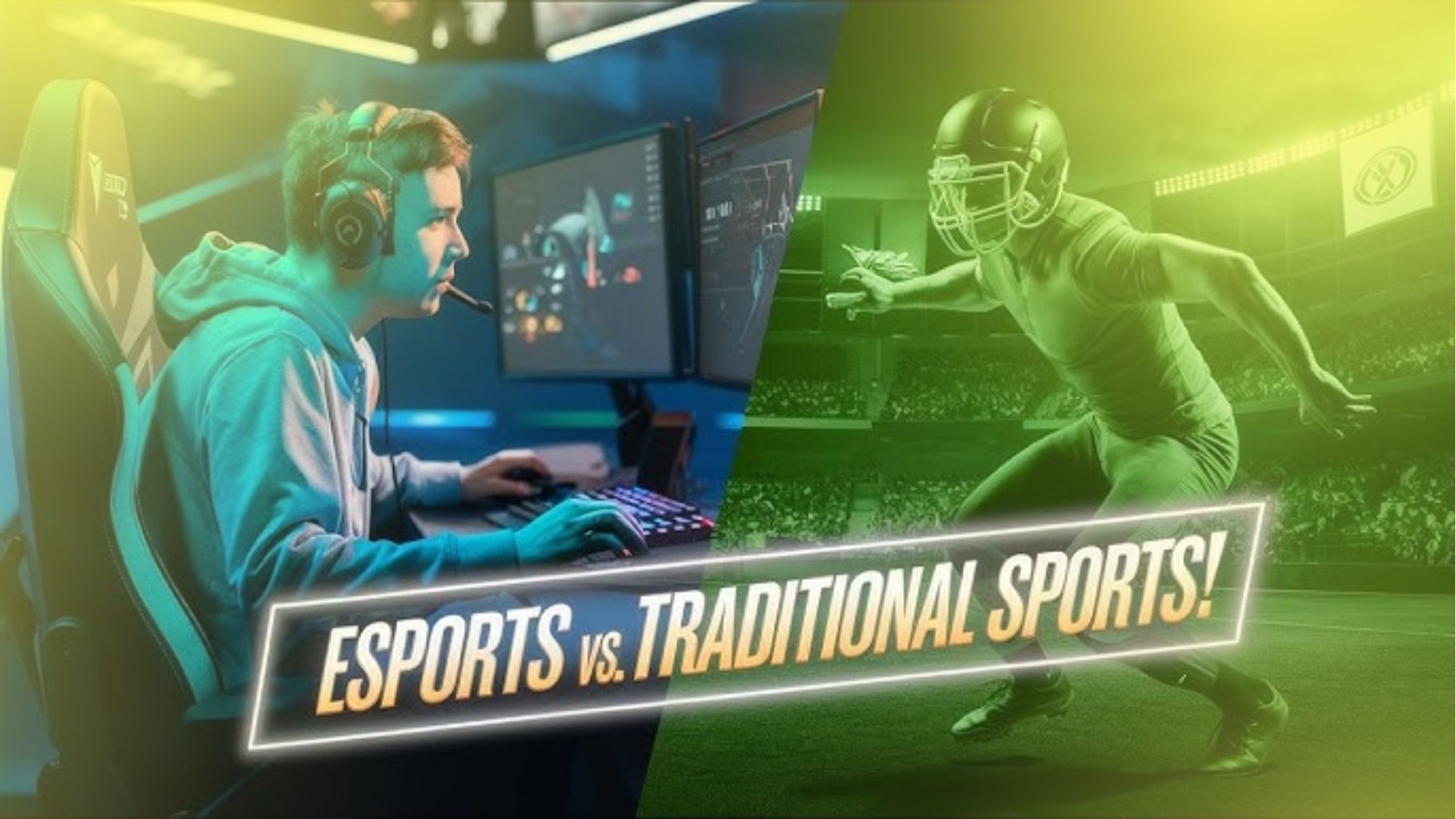
For decades, traditional sports like football, basketball, and soccer have dominated the global stage, captivating millions with stories of athletic excellence, national pride, and team spirit. But in the last decade, a new challenger has emerged from the digital realm: Esports.
Once dismissed as “just video games,” esports has exploded into a billion-dollar global industry with professional teams, sold-out arenas, and millions of passionate fans. Now, the question isn’t whether esports are real sports — it’s how they compare to traditional ones.
Let’s break it down.
The Playing Field: Physical vs. Digital
Traditional sports take place on physical fields, courts, or tracks. Athletes rely on physical endurance, strength, and real-world coordination. The training is intense, the toll on the body is high, and careers can be short due to injury or aging.
Esports, in contrast, are played on digital platforms using computers or consoles. But don’t let the lack of sweat fool you — professional gamers train for 8–12 hours a day, sharpening reflexes, learning strategies, and developing near-surgical precision in high-stakes environments.
Key difference:
- Traditional sports emphasize physical performance.
- Esports focus on mental agility, reaction speed, and strategic execution.
Skills and Discipline
Both worlds demand a high-performance mindset.
- A quarterback must read defenses in seconds and make lightning-fast decisions.
- A professional League of Legends player must process dozens of data points and coordinate with teammates in real time under pressure.
Common mental attributes include:
- Split-second decision making
- Resilience under pressure
- Team communication
- Discipline and routine
- Pattern recognition and anticipation
The type of skill differs, but the level of mastery is comparable.
Money and Sponsorship
- Traditional sports still lead in terms of global revenue, with leagues like the NFL, NBA, and Premier League generating billions annually.
- However, esports is catching up fast. Global esports revenues surpassed $1.5 billion, with top players and streamers earning millions through prize pools, sponsorships, and fan donations.
Notable deals:
- Nike and Adidas sponsor esports teams.
- Universities offer esports scholarships, just like traditional sports.
The gap is closing — fast.
Fans and Culture
Sports have always been about more than the game — they’re about community.
- Traditional sports have a legacy of generational loyalty, local pride, and cultural identity.
- Esports is building its own culture — one that’s younger, global, and digitally native. Tournaments like The International (Dota 2) and League of Legends Worlds draw millions of viewers worldwide.
Esports fans are not only watching — they’re engaging via Twitch, YouTube, Discord, and Reddit. The lines between player, fan, and creator are more blurred than ever.
Legitimacy and Recognition
There was a time when esports weren’t taken seriously. But that’s changed:
- The Asian Games now include esports as medal events.
- The Olympic Movement is exploring esports integration.
- Universities, governments, and even military programs are recognizing esports as legitimate competition.
Meanwhile, traditional sports organizations are investing in esports — with NBA teams owning esports franchises and soccer clubs launching FIFA rosters.
Esports vs. Traditional Sports: A Quick Comparison
| Category | Traditional Sports | Esports |
| Arena | Physical stadiums | Digital platforms |
| Skills | Physical endurance, strength, coordination | Mental agility, reflexes, strategic thinking |
| Audience | Global, legacy-driven | Global, digital-first, younger |
| Training | Physical workouts, drills | Screen time, strategy sessions, reaction training |
| Injury Risk | High (ACL tears, concussions) | Moderate (wrist, posture, burnout) |
| Revenue | Higher overall | Rapidly growing |
The Future: Collaboration, Not Competition
So, who wins?
The truth is: it’s not a battle—it’s a blending.
We’re seeing increasing crossover between the two worlds:
- Traditional athletes investing in esports (e.g., Shaquille O’Neal, David Beckham, Serena Williams)
- Esports adopting sports science, nutrition, and coaching structures
- Sports teams launching esports academies
In the future, expect to see more hybrid events, VR-based competition, and digital integration between traditional leagues and the esports world.
Final Thoughts
Esports and traditional sports may look different, but they’re driven by the same spirit: competition, community, and excellence.
Both demand discipline, resilience, and performance under pressure. Both offer young people a path to greatness. And both are shaping the future of how we play, watch, and connect.
So whether you’re on a field or behind a screen—if you train hard, play smart, and show up when it counts—you’re an athlete.
And the game is just beginning.