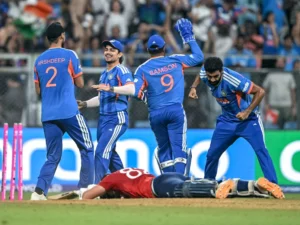
From Underdog to Champion: When Comebacks Become Legends

There’s a unique magic in a comeback story—the kind that gives you chills, makes your heart race, and leaves you quietly whispering, “Anything is possible.”
In the world of sports, comebacks aren’t just about winning. They’re about endurance, healing, and unshakable belief in oneself. These athletes and teams didn’t just return to the game—they rewrote the narrative. They turned struggle into strength, pain into power, and doubt into legacy.
Let’s explore some of the most unforgettable comeback stories where the underdog became the champion—not just in medals, but in spirit.
1. Andy Murray – Comeback from Career-Threatening Injury
A three-time Grand Slam champion, Andy Murray was once ranked No. 1 in the world. But by 2017, chronic hip pain threatened to end his career. After multiple surgeries—including a metal hip implant—many believed his time at the top was over.
Yet Murray refused to quit.
In 2019, he returned to professional tennis, defying medical expectations. Later that year, he won the European Open—his first title since surgery. Murray didn’t just return to play—he returned to win, on his terms.
2. The Boston Red Sox – 2004 ALCS Comeback Against the Yankees
No team had ever come back from a 3-0 deficit in a Major League Baseball playoff series—until the 2004 Boston Red Sox faced the New York Yankees in the American League Championship Series.
What followed was the stuff of legend: extra-inning heroics, stolen bases, clutch hitting, and unrelenting belief. The Red Sox won four straight games, completed the comeback, and went on to win their first World Series in 86 years.
This wasn’t just a comeback. It was a cultural shift. A curse broken. A city healed.
3. Simone Biles – Prioritizing Mental Health and Returning Stronger
The world expected perfection from Simone Biles at the Tokyo 2020 Olympics. But in a stunning moment, she stepped away from competition to protect her mental health, opening up about experiencing the “twisties”—a dangerous loss of spatial awareness.
Instead of pushing through pain for medals, she chose courage over competition. And then she came back. Biles returned later in the Games to win a bronze on the balance beam, but more importantly, she sparked a global conversation about mental strength vs. mental struggle.
Her comeback wasn’t about gymnastics. It was about humanity.
4. The Cleveland Cavaliers – 2016 NBA Finals
Down 3-1 in the NBA Finals to the 73-win Golden State Warriors, the Cleveland Cavaliers seemed all but finished. No team had ever come back from that kind of deficit in the Finals.
But with LeBron James leading the charge and Kyrie Irving hitting the shot of a lifetime in Game 7, the Cavaliers pulled off a historic comeback—delivering the city of Cleveland its first NBA title and erasing a 52-year championship drought.
It was more than basketball. It was a lesson in belief, teamwork, and refusing to fold under pressure.
5. Oscar Pistorius – From Amputee to Olympian
Before his life took a tragic turn, Oscar Pistorius was a beacon of inspiration. Born without fibulas and having both legs amputated before he was a year old, he went on to become a world-class sprinter—earning the nickname “Blade Runner.”
In 2012, Pistorius became the first double-amputee to compete in the Olympic Games, challenging not just physical limits but the boundaries of possibility.
His story remains a complicated one, but his athletic comeback reminds us how barriers—both physical and societal—can be broken with vision, innovation, and will.
Why These Stories Matter
In every underdog comeback, there’s a moment of decision: Do I stay down, or do I rise?
That’s what makes these stories timeless. Whether it’s recovering from injury, overcoming mental health struggles, proving doubters wrong, or fighting against long odds—comebacks speak to something universal in all of us.
They remind us that failure isn’t the end. It’s part of the journey.
Final Thoughts: The Champion Within
The beauty of comeback stories is that they aren’t reserved for world-class athletes. Every one of us, in our own way, is navigating battles—some seen, many unseen. And every time we choose to stand back up, we’re writing our own version of these stories.
The scoreboard doesn’t always reflect the win. Sometimes, the real victory is just getting back in the game.
So whether you’re chasing a goal, healing from a setback, or trying to find your way again, remember this:
The underdog still has time.
The champion is still within you.
The comeback is always possible.